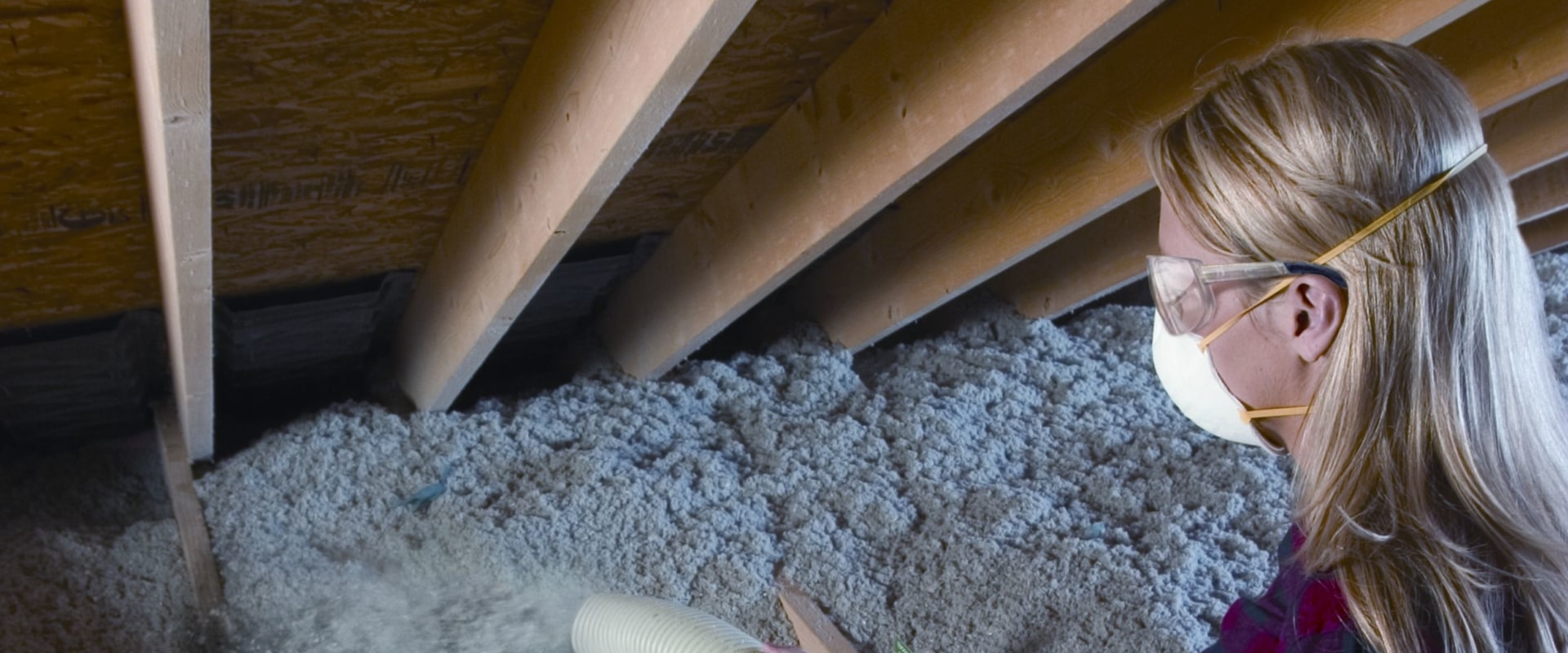
By that point, the insulation has usually been underperforming for years.
After hundreds of attic assessments across Altamonte Springs, here's what we've learned: the question is rarely if the insulation needs attention. In most homes built before 2000, it does. The real question is what kind — and getting that answer right is what separates a home that performs from one that keeps chasing the same problems.
This page covers exactly that:
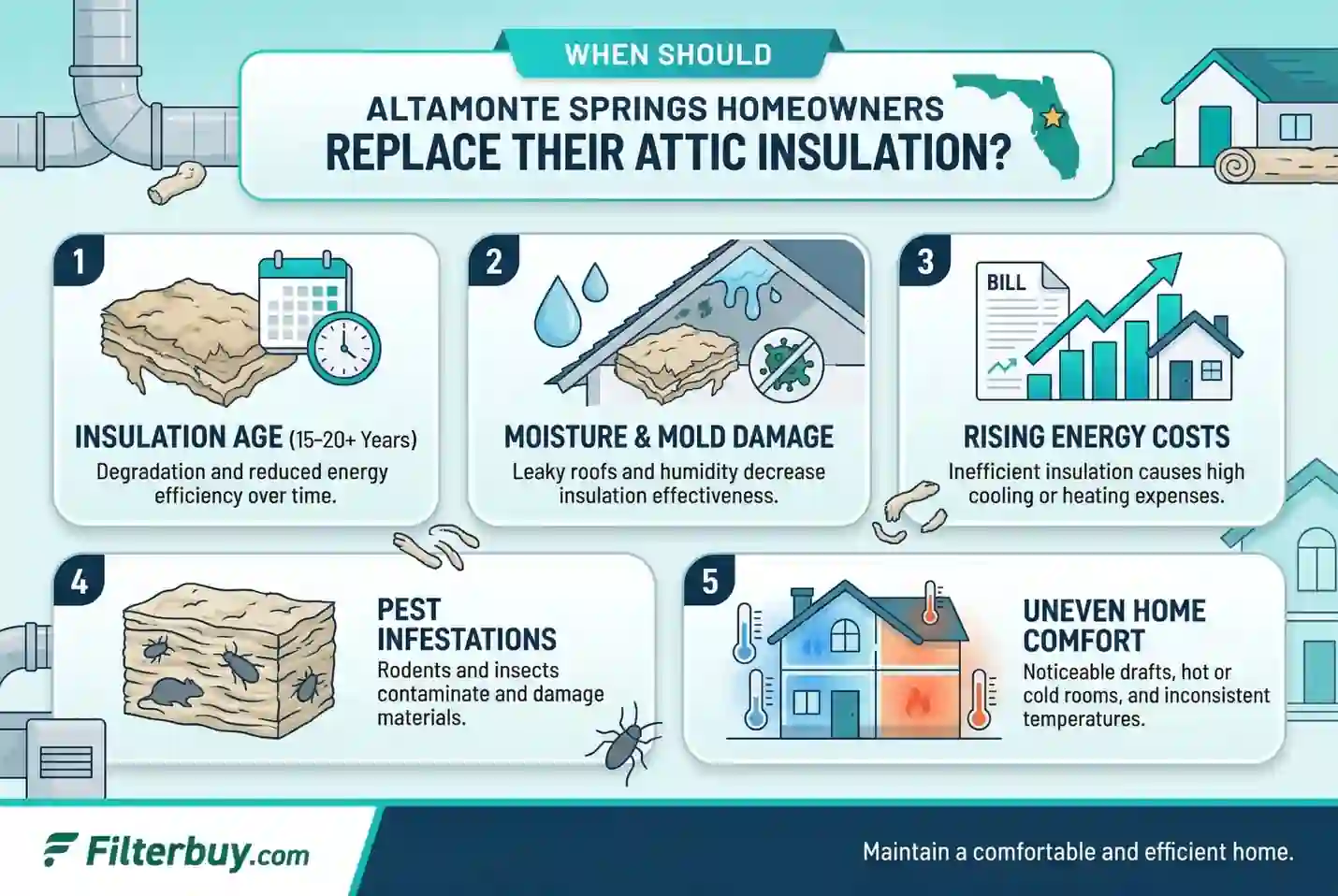
Specific conditions and timelines that signal full replacement — not just a top-up
Why Central Florida's heat and humidity degrade insulation faster than most homeowners expect
How to distinguish insulation that needs supplementing from insulation that needs to come out entirely
What replacement realistically costs in Altamonte Springs and how to capture up to $2,000 in available incentives
The single step most homeowners skip — and what it costs them
We've seen the inside of enough Altamonte Springs attics to know that the homes spending the most on cooling are rarely the ones with the wrong equipment. They're the ones where nobody looked up — and where top insulation installation near Altamonte Springs FL can make a meaningful difference in comfort, efficiency, and year-round energy savings.
TL;DR Quick Answers
Top Insulation Installation Near Altamonte Springs FL
Looking for the short version? Here's what every Altamonte Springs homeowner needs to know before scheduling an attic insulation project:
Target R-value: R-49 to R-60 — not the R-38 code minimum. Florida's heat and humidity demand more.
Best material: Blown-in fiberglass for most homes. Closed-cell spray foam for homes with moisture history or attic duct systems.
Typical cost: $1,500 – $4,000 for full replacement with air sealing before incentives.
Available incentives: Up to $2,000 combined — Duke Energy Florida rebate (up to $800) plus Federal 25C tax credit (30%, up to $1,200). Complete the Home Energy Check first or you lose both.
Most important first step: Schedule a professional attic assessment. Most Altamonte Springs homes haven't had one since original installation.
Why it matters: Florida homes spend 28% of total household energy on AC. The attic is the highest-impact upgrade available — and the most consistently overlooked.
Who to call: Filterbuy HVAC Solutions serves Altamonte Springs and surrounding Seminole County communities including ZIP codes 32701, 32714, 32716, and 32751.
Top Takeaways
Florida attics are harder on insulation than almost anywhere else. Sustained heat. Year-round humidity. Extreme roof temperatures. All three accelerate compression and material breakdown faster than age alone.
The attic is almost always the problem — not the equipment. When an AC system can't keep up, the attic is the first place we look. In most cases, it's the last place we need to look.
Appearance and performance are two different things. Insulation that looks fine from the hatch can be compressed, moisture-damaged, or well below code. The only way to know what you have is to measure it.
Delayed replacement compounds the cost. Higher bills. More AC runtime. Accelerated system wear. With up to $2,000 in combined incentives available now, the gap between acting and waiting keeps growing.
Homeowners who act before a crisis share the same reaction. They wish they had done it sooner. The improvement was immediate. The payoff was larger than expected.
The Lifespan of Attic Insulation in Florida Is Shorter Than the National Average
Most insulation manufacturers quote lifespans of 20 to 30 years. Those numbers were not calculated for Central Florida.
What accelerates degradation here that doesn't apply in most other climates:
Sustained heat: Attic temperatures in Altamonte Springs regularly exceed 150°F in summer. That thermal cycling breaks down materials faster than in moderate climates.
Year-round humidity: Moisture infiltration compresses blown-in materials, reduces R-value, and creates conditions for mold growth — often without visible signs from below.
HVAC ductwork in the attic: Most Central Florida homes run ductwork through unconditioned attic space. Heat and vibration from active systems accelerate material breakdown around and beneath the ducts.
Storm and wind events: Florida's weather history means attic spaces experience pressure, moisture intrusion, and debris infiltration that other regions don't.
The practical result: insulation installed in the 1990s that might still be performing adequately in a dry northern climate is almost certainly underperforming in an Altamonte Springs home today.
Replacement vs. Top-Up — How to Tell the Difference
Not every insulation project is a full replacement. Understanding which situation you're in changes both the cost and the approach.
You likely need a top-up if:
Current insulation is in good condition but below target depth
No signs of moisture, compression, or pest intrusion
Home was built after 1990 with original materials intact
Current R-value is between R-19 and R-30 — short of the R-49 target but structurally sound
You likely need full replacement if:
Insulation shows visible moisture damage, staining, or mold
Materials have compressed to less than half their original depth
Pest activity has contaminated or displaced existing insulation
Home was built before 1980 and insulation has never been replaced
Water intrusion from roof damage has reached the attic floor
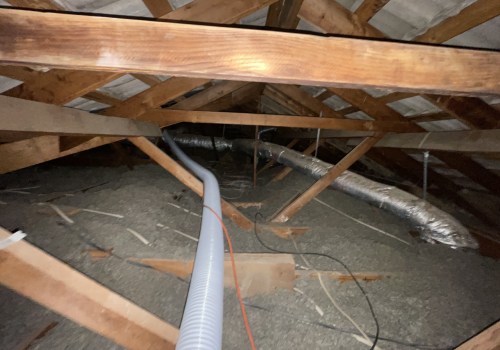
One thing we see consistently in older Altamonte Springs homes: insulation that looks adequate from the hatch but reveals significant moisture damage and compression once properly assessed. A visual check from the opening is not sufficient. Full access and measurement across multiple points is the only way to know for certain, which is why many homeowners rely on an experienced attic insulation installation company for a proper evaluation.
The Age and Era of Your Home Is the Strongest Predictor
In our experience, the year a home was built tells us more about the likely state of its insulation than almost any other factor.
Here's what each era typically looks like when we open the hatch:
Pre-1978: Original insulation almost always present, rarely supplemented, frequently contaminated or compressed. Some homes in this era contain vermiculite — a material that may contain asbestos and requires professional testing before any work begins.
1978 to 1990: Fiberglass batts or early blown-in materials installed to standards far below current code. R-values typically in the R-11 to R-19 range. Significant shortfall against today's R-49 target.
1990 to 2000: Better starting point but materials are now 25 to 35 years old. Humidity and thermal cycling have taken a measurable toll. Top-up or partial replacement is common.
2000 to 2010: Closest to adequate but still frequently short of R-49. Ductwork conditions in the attic are often the bigger issue in this era.
Post-2010: Most likely to be at or near code — but not guaranteed. Builder-grade insulation installed to minimum standards, not optimal ones.
If your home falls into any category before 2000 and hasn't had a professional attic assessment, the odds strongly favor that action is needed.
Warning Signs That Replacement Can't Wait
Some insulation issues are gradual. These are not.
Contact a professional immediately if you notice:
Visible mold or dark staining on attic surfaces or insulation material
A musty or damp odor coming from vents or the ceiling
Evidence of pest activity — droppings, nesting material, or displaced insulation
Water staining on attic decking following rain events
A sudden unexplained increase in energy bills with no change in usage or equipment
In our experience, homeowners who delay after seeing these signs consistently face larger remediation costs — and in some cases, structural damage — that proper insulation replacement would have prevented entirely.
What Attic Insulation Replacement Costs in Altamonte Springs — and How to Offset It
Full replacement projects in the Altamonte Springs area typically run $1,500 to $4,000 depending on:
Attic square footage
Whether old insulation requires removal and disposal
Material selected
Whether air sealing is included — which it should be
Available offsets that bring that number down significantly:
Duke Energy Florida rebate: Up to $800 — requires a Home Energy Check completed before installation
Federal 25C tax credit: 30% of project cost, up to $1,200 — requires a certified home energy auditor
Combined maximum offset: Up to $2,000
The order of operations matters. Complete the Home Energy Check before scheduling installation so you can take full advantage of available rebates and incentives when planning attic insulation installation near me. Neither incentive can be claimed after the project is done.
"The homes that surprise us most aren't the ones with obvious problems — they're the ones where the insulation looks fine from the hatch. We've opened attics that appeared intact from the access point and found materials compressed to half their rated depth, moisture damage running along the eaves, and R-values that hadn't met code in a decade. In Altamonte Springs, appearance and performance are two very different things. The only way to know what you actually have is to get in there and measure it."
Essential Resources
We share these resources with every homeowner we sit down with before an attic project begins. The more informed you are going in, the better the outcome — and the less likely you are to miss something that costs you later.
1. Know What You Have Before Anyone Touches It: DOE Guide to Adding Insulation to an Existing Home
Most homeowners we talk to have never measured their attic insulation. This DOE guide shows you exactly how — and helps you understand whether your home needs a top-up or a full replacement before a contractor ever opens the hatch.
https://www.energy.gov/energysaver/weatherize/insulation/adding-insulation-existing-home
2. Know When the Job Is More Than It Appears: ENERGY STAR Attic Insulation Project Guide
Older Altamonte Springs homes regularly surprise us. Moisture, pests, improper venting — these conditions have to be resolved before insulation work begins, not after. This ENERGY STAR guide covers exactly what to look for and when to call a professional before assuming the project is straightforward.
https://www.energystar.gov/saveathome/seal_insulate/attic-insulation-project
3. The Step Most Homeowners Skip — and Shouldn't: ENERGY STAR Attic Air Sealing Project Guide
New insulation installed over unsealed air leaks is one of the most common mistakes we see. Air sealing has to come first. This guide identifies the leak points we find most often in Florida homes — recessed lights, duct penetrations, attic hatches — and explains how to address each one before any insulation goes in.
https://www.energystar.gov/saveathome/seal_insulate/attic-air-sealing-project
4. If Your Home Was Built Before 1990, Read This Before You Do Anything Else: EPA Guide to Asbestos-Contaminated Vermiculite Insulation
This comes up more often than homeowners expect in older Altamonte Springs homes. Vermiculite insulation — sold under the brand name Zonolite through the 1980s — may contain asbestos. The EPA's guidance is clear: treat it as contaminated and don't disturb it yourself. A trained professional needs to assess it first.
https://www.epa.gov/asbestos/protect-your-family-asbestos-contaminated-vermiculite-insulation
5. Don't Leave Money on the Table: IRS Section 25C Energy Efficient Home Improvement Credit
Qualifying replacement projects are eligible for 30% back — up to $1,200. Most homeowners we work with don't know this credit exists until the project is already done. Read the eligibility requirements here. The certified auditor requirement and the documentation process cannot be completed after installation.
https://www.irs.gov/credits-deductions/energy-efficient-home-improvement-credit
6. Up to $2,000 Back — But Only If You Do This First: Duke Energy Florida Attic Insulation Rebate
Duke Energy Florida offers up to $800 on qualifying projects for Altamonte Springs homeowners. Combined with the federal tax credit, that's up to $2,000 in potential savings. The Home Energy Check must be completed before installation begins. We've seen homeowners lose both incentives by getting the order wrong.
https://www.duke-energy.com/home/products/home-energy-improvement/attic-insulation-upgrade?jur=FL01
7. Make Sure Your Contractor Is Doing the Job to Today's Standard: Florida Building Code Energy Conservation 2023
This is the current legal requirement for every permitted insulation project in Seminole County. Not every contractor pulls permits or works to current code. Knowing what the 2023 standard requires means you can verify the work — not just hope for the best.
https://www.seminolecountyfl.gov/docs/default-source/pdf/FormR402-2023ada.pdf
These trusted resources help Altamonte Springs homeowners plan attic upgrades more effectively while emphasizing the benefits of proper attic insulation, including improved energy efficiency, better indoor comfort, reduced cooling costs, and compliance with Florida building codes and available rebate programs.
Supporting Statistics
We quote these numbers to every homeowner we sit down with. The data backs up exactly what we see in the field.
9 out of 10 U.S. homes are under-insulated.
ENERGY STAR puts the national under-insulation rate at 9 in 10 homes. After years of attic assessments across Seminole County, that number doesn't surprise us — but it still concerns us.
What we've learned from opening hundreds of attic hatches in Altamonte Springs:
Florida's sustained heat accelerates material compression
Year-round humidity degrades insulation from the inside out
Homes that passed a visual inspection from the hatch have surprised us with R-values that hadn't met code in a decade
The 9-in-10 number is a floor, not a ceiling, for Central Florida.
Source: ENERGY STAR — Why Seal and Insulate? https://www.energystar.gov/saveathome/seal_insulate/why-seal-and-insulate
Air conditioning accounts for 28% of total home energy use in Florida — more than three times the national average of 9%.
The U.S. Energy Information Administration's 2020 RECS puts Florida AC energy use at 28% of total household energy. We reference this number in nearly every attic conversation we have. Here's why it matters:
In most of the country, poor attic insulation is a comfort problem
In Altamonte Springs, it's a financial one
Every degree of heat that transfers through a degraded attic floor becomes AC runtime
Every hour of AC runtime becomes money on a bill already running 3x what homeowners in cooler states pay
Fixing the attic doesn't just improve how a home feels. It changes what it costs to live in it.
Source: U.S. Energy Information Administration — 2020 RECS https://www.eia.gov/pressroom/releases/press535.php
Proper attic insulation and air sealing can reduce heating and cooling costs by an average of 15%.
EPA's 15% average savings estimate is a number we've seen hold up in the field. The homeowners who report the biggest reductions share a common story:
Their insulation had been quietly failing for years before anyone looked
Nobody had measured it — they just assumed it was fine
Once replaced, the difference showed up on the next bill
The 15% figure assumes a reasonable starting point. Homes with severely compressed or moisture-damaged insulation — which we find regularly in pre-2000 Altamonte Springs construction — often have more room than that to gain.
Source: ENERGY STAR — Rule Your Attic! For Comfort and Savings https://www.energystar.gov/saveathome/seal_insulate/rule_your_attic
Conventional roofs reach 150°F or more on sunny summer afternoons — and that heat transfers directly into under-insulated attics.
The U.S. Department of Energy documents roof surface temperatures of 150°F or higher on a standard summer afternoon. In Altamonte Springs, we don't need a study to confirm it — we feel it every time we open an attic hatch in July.
What that temperature means in practical terms:
Without adequate insulation, an AC system isn't cooling a house — it's fighting a 150-degree wall on the other side of the ceiling
We've assessed attics where degraded insulation was providing almost no meaningful thermal resistance
The equipment in those homes wasn't malfunctioning — it was simply overwhelmed
Replacing the insulation didn't just help. It changed the entire performance profile of the HVAC system.
Source: U.S. Department of Energy — Cool Roofs https://www.energy.gov/energysaver/cool-roofs
Final Thought & Opinion
After assessing attics across Altamonte Springs and Seminole County for years, one pattern repeats itself more than any other. A homeowner calls about an AC system that won't keep up. We go into the attic. The insulation is compressed, thinned, or damaged in ways that weren't visible from the hatch.
Here's what we've learned from seeing this hundreds of times:
Most homeowners aren't choosing to delay — they simply don't know what's up there
The attic is the one part of the home that almost never gets looked at until something goes wrong
By the time something goes wrong, the utility bills have been elevated for years
The equipment gets blamed. The thermostat gets adjusted. A new AC unit gets quoted. The attic stays untouched.
Our opinion, formed after hundreds of assessments: in Central Florida's climate, attic insulation is not a home improvement project. It's a mechanical necessity. A 150-degree roof deck will push heat into a living space whether the homeowner knows it or not. The only variable is how much resistance is in the way.
What the data confirms and what we've seen firsthand:
9 in 10 homes are under-insulated nationally — Florida's conditions make that worse
AC already consumes 28% of a Florida household's total energy budget
Every year of delayed replacement compounds the cost — in utility bills, in accelerated HVAC wear, and in comfort lost through Central Florida's longest seasons
The homeowners who act before a crisis share the same reaction. They wish they had done professional attic insulation installation sooner. Not because the project was complicated. Because the improvement was immediate and the payoff was larger than they expected.
FAQ on Top Insulation Installation Near Altamonte Springs FL
Q: How do I know if my Altamonte Springs home needs attic insulation replacement?
A: The signs we find most consistently in Seminole County homes aren't dramatic. They're gradual — which is exactly why most homeowners miss them.
Signs your attic insulation needs attention:
AC runs constantly but never reaches the set temperature
Utility bills climb without an obvious explanation
Certain rooms stay warmer than the rest of the house
Insulation is visible at or below the attic floor joists
Musty odors come from vents or the attic hatch
Home was built before 2000 with no professional attic assessment
That last point matters more than most homeowners realize. We regularly assess Altamonte Springs homes where insulation hasn't been evaluated since original installation. In Florida's climate, that's rarely good news. Any one of these signs warrants a closer look. More than one means the attic should be the first place you investigate — not the last.
Q: What R-value do I need for attic insulation in Altamonte Springs?
A: Altamonte Springs sits in Climate Zone 2. Code minimum is R-38. In our experience, that's where the conversation starts — not where it ends.
R-value targets by home type:
R-38: Meets current code minimum — adequate for newer, well-sealed homes with recent installation
R-49: The practical target for most Altamonte Springs homes we assess
R-60: Recommended for older homes, homes with attic duct systems, or any home where AC has consistently struggled
We've assessed homes sitting at R-19 or lower that were never flagged during routine maintenance. The gap between R-38 and R-60 isn't theoretical. It shows up on every utility bill from May through October.
Q: What type of attic insulation works best in Altamonte Springs' climate?
A: Florida's heat and humidity narrow the options quickly. After completing projects across Altamonte Springs and surrounding communities, here's what we recommend most often:
Blown-in fiberglass: Best all-around option for standard Altamonte Springs attics. Resists moisture. Achieves consistent coverage across irregular attic floors — including around obstructions where batts consistently underperform.
Closed-cell spray foam: Strongest performer for homes with significant air leakage, attic duct systems, or any history of moisture intrusion. Higher upfront cost. Strongest long-term results.
Open-cell spray foam: Effective for air sealing but not recommended as a standalone solution in Florida's high-humidity environment without careful vapor management.
Fiberglass batts are common in older Altamonte Springs homes. They compress over time. They leave gaps around penetrations and obstructions. In most replacement projects we complete, blown-in fiberglass or closed-cell spray foam delivers measurably better results.
Q: How much does attic insulation replacement cost in Altamonte Springs and what incentives are available?
A: Typical project costs in Altamonte Springs:
Top-up only: $800 – $1,500
Full replacement with air sealing: $1,500 – $4,000
Spray foam applications: $2,000 – $5,000+
Available incentives — but only if steps are completed in the right order:
Duke Energy Florida rebate: Up to $800. Home Energy Check must be completed before installation — not after.
Federal 25C tax credit: 30% of project cost, up to $1,200. Eligibility must be confirmed before work begins.
Combined maximum: up to $2,000 back. We've worked with homeowners who lost both incentives by getting the sequence wrong. The savings are real — but only if the process is followed correctly from the start.
Q: How long does attic insulation installation take in Altamonte Springs?
A: Most projects follow a predictable single-day timeline:
Assessment: 45 – 90 minutes to measure R-values, identify moisture or pest issues, and confirm air sealing needs
Air sealing: 2 – 4 hours depending on severity of penetrations — this step gets skipped by contractors more often than it should
Insulation installation: 2 – 5 hours for most standard attic sizes
Full project completion: Most Altamonte Springs homes finished in a single day
Larger attics, moisture damage, or remediation requirements can extend the timeline to two days. We walk every homeowner through the full scope before work begins. No surprises on project day.
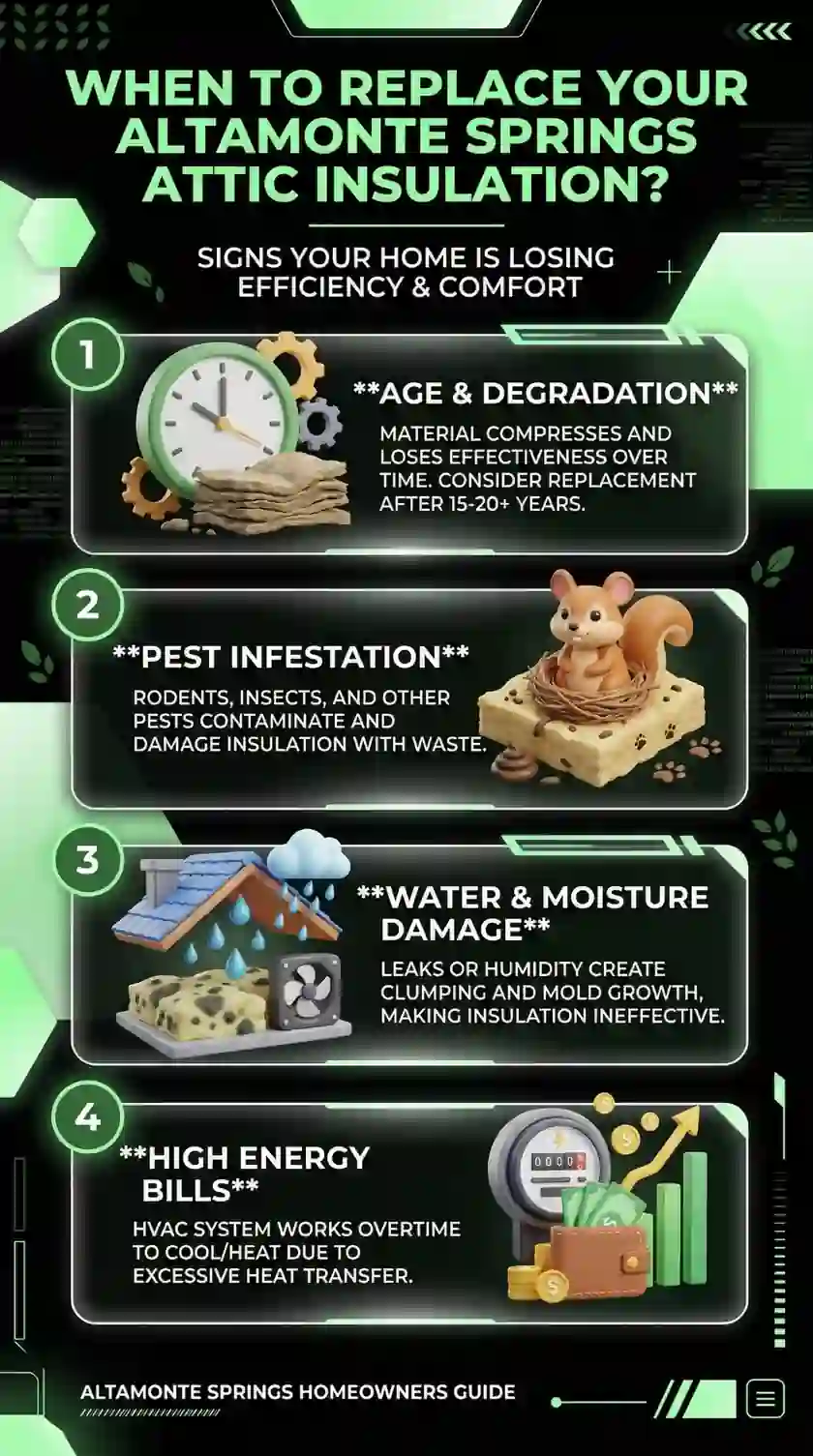
If you’re evaluating attic performance, the article When Should Altamonte Springs Homeowners Replace Their Attic Insulation? explains that aging or compressed insulation often leads to higher cooling costs, uneven indoor temperatures, and an HVAC system that runs longer than it should. While replacing attic insulation restores the thermal barrier that protects your home from Central Florida heat, maintaining proper airflow and filtration inside the HVAC system is just as important. Using quality filters such as the 12x12x1 pleated furnace air filter helps capture dust and airborne particles that circulate through the system. Standard replacements like the 20x20x1 MERV 8 HVAC air filter also support cleaner airflow and consistent system performance while your attic insulation improves energy efficiency. For homeowners comparing additional options, the MERV 11 HVAC furnace replacement filter provides another compatible filtration choice that works alongside insulation upgrades to help your HVAC system run more efficiently and keep Altamonte Springs homes comfortable year-round.