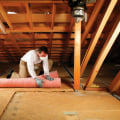
Three of the Clermont attics we walked last month were less than three years old. Each had passed inspection at R-38, exactly what Florida code requires in our climate zone. When we measured them ourselves, all three came in under R-32. That gap between what code requires and what a house is actually delivering 18 months later is the part of new construction nobody warns owners about, and in fast-growing markets like Lake County, more new owners are running into it every year.
The same pattern shows up across Wellness Ridge, Serenoa, Sawgrass Bay, and Ridgeview. Building insulation is one of the most important pieces of a Florida home’s envelope. It does most of its work invisibly. When it stops performing, the symptoms show up everywhere except the attic itself: uneven rooms, long AC runtimes, climbing bills. The reason almost always traces back to that gap between what gets inspected and what’s still in place 18 months later.
TL;DR Quick Answers
top insulation installation near Clermont FL
Top insulation installation near Clermont, FL means a Florida Building Code R-38 install verified by depth measurement at 8 to 10 attic points, paired with air sealing at top plates and recessed cans, performed by a Florida DBPR-licensed contractor whose work still measures close to spec two summers later.
What we look for in any provider, including ours:
Florida DBPR license verified through MyFloridaLicense.com
Written depth map at 8 to 10 attic points, not a verbal estimate
Air sealing scope included (top plates, can lights, attic hatch)
Soffit baffle inspection on every visit
Specific R-value recommendation by housing era and community
Top Takeaways
Florida Building Code Climate Zone 2 sets R-38 as a minimum, not a guarantee of long-term performance.
Blown-in fiberglass typically settles 15 to 25 percent within the first two Florida summers, dropping a code-passing R-38 install to roughly R-30 or below.
Five small air-leak sites can cancel most of the value of a code-passing insulation install: top plates, recessed cans, attic hatches, plumbing chases, and HVAC platforms.
Attic-mounted air handlers and ducts lose efficiency every time the attic exceeds 130°F, which it does most summer afternoons in Central Florida.
A real assessment measures depth, moisture, baffles, and air leaks together, because each one affects the others.
Code Compliance Is the Floor, Not the Ceiling
Florida Building Code Energy Conservation Volume, 8th Edition (2023), Table R402.1.2 sets R-38 as the minimum attic insulation R-value for Climate Zone 2, which covers Lake County and most of Central Florida. Every Clermont production builder we’ve worked behind hits that number on paper, and most of them hit it on installation day. What the code doesn’t measure is what the same attic looks like two summers later, after the material has cycled through 100-degree humidity swings dozens of times. That’s where the gap between code-pass and still-performing opens up.
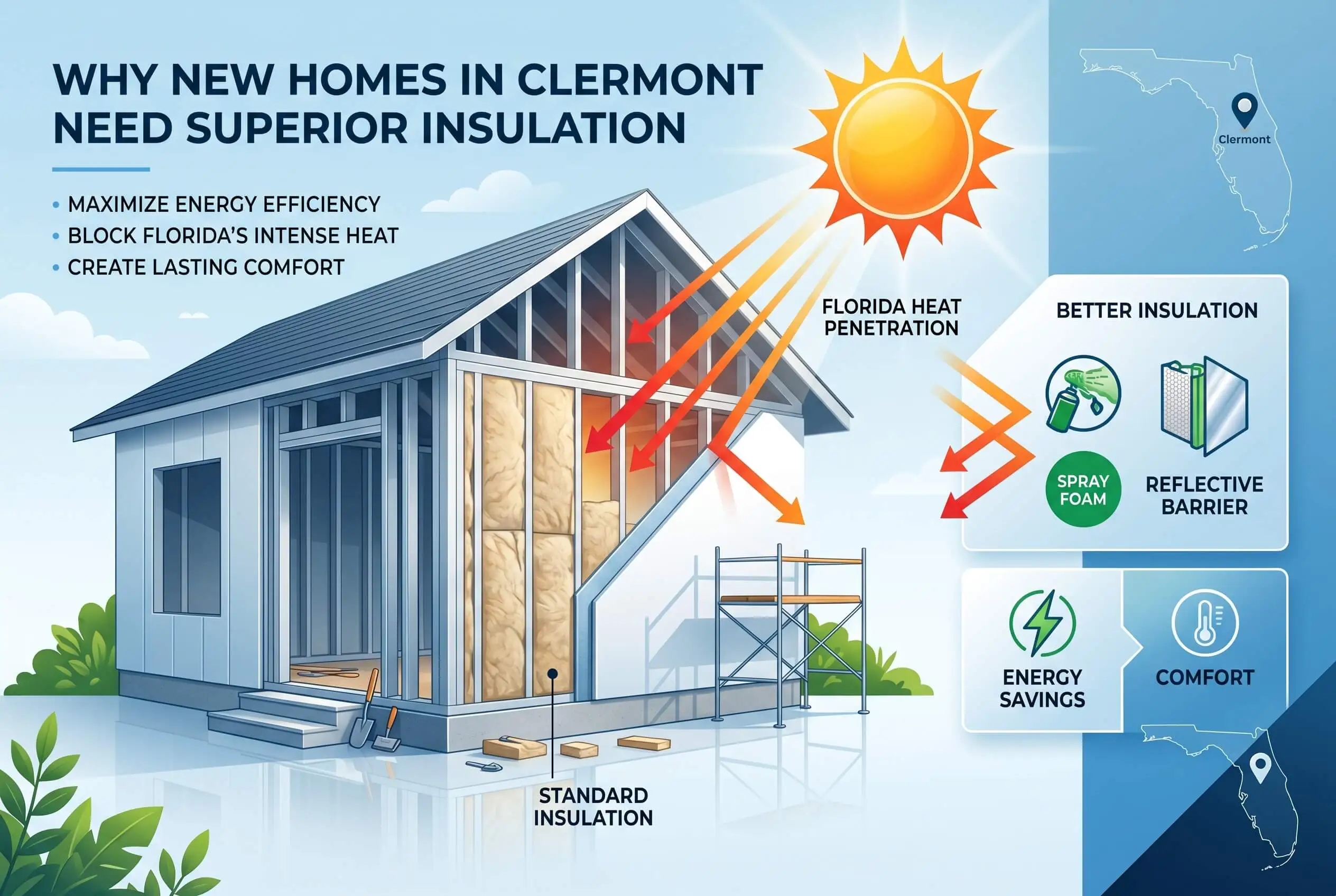
Builders run on tight margins and tight schedules. They install the spec, the inspector verifies the spec, and the certificate of occupancy issues. None of that process accounts for settling, baffle compression near the soffit vents, or the dozens of small air-leak penetrations that quietly drain insulation value during the first year of occupancy. That’s a structural blind spot in how new construction gets verified, not a builder shortcoming. The code is a floor, and most of our Clermont neighbors are living right on it, which is why homeowners searching for the best attic insulation solutions often discover that performance optimization after move-in can make a significant difference in comfort, efficiency, and long-term energy savings.
Blown-In Fiberglass Settles Faster Than Most New Owners Expect
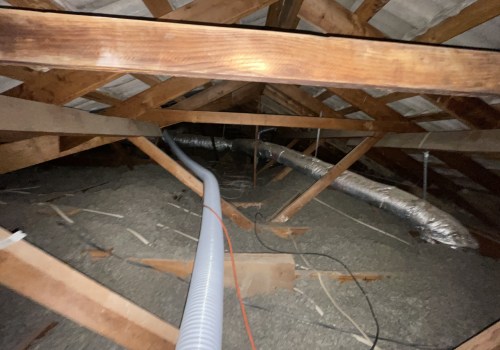
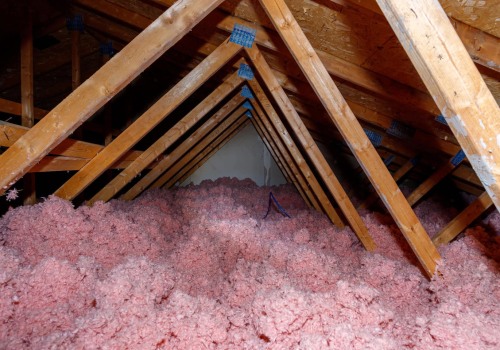
In our experience inspecting Lake County attics, blown-in fiberglass that started at 13 inches of installed depth often reads 9 to 10 inches by month 24. That’s a loss of roughly 20 percent of the installed R-value, which drops a code-passing R-38 install closer to R-30 or below. None of this means the material is defective. Fiberglass does exactly this under Central Florida conditions, year after year.
Three forces drive the settling. The weight of the material compresses lower layers over time, particularly in deeper installs. Humidity cycling between dry winter mornings and saturated August afternoons causes the fibers to lose loft. And attic temperatures that routinely exceed 130°F bake out residual moisture, which accelerates compaction further. None of this shows up on a builder warranty inspection, because nobody climbs into the attic with a ruler at the one-year mark.
Here’s a check anyone can do without tools. Shine a flashlight across the attic floor. If the ceiling joists are visible running across the surface, the insulation has settled below code-equivalent depth. We see exposed joists in well over half the post-2020 Clermont attics we walk, including homes whose builders advertised “premium energy packages” at sale.
The Five Air-Leak Sites Most Clermont Builders Don’t Catch
Insulation only works if it’s sealed against the airflow it’s trying to slow. Hot, moist attic air that can pass freely into the conditioned space below cancels much of the R-value above it, no matter how deep the install. Air sealing is the work that ties the system together, and it’s the work that gets done least well in volume new construction.
Top plates come first, where exterior walls meet the attic floor. Every electrical wire, every plumbing line, every framing penetration through the top plate creates a small hole. Across an entire house, those small holes add up to a major leak. Recessed can lights in the ceiling are the second site, especially the older non-IC-rated style that builders sometimes carry forward into newer homes. The attic access hatch is often the single biggest individual leak in the house, because it has no weatherstripping or insulation on its top side. It usually sits in a hallway or closet. Plumbing chases that run vertically from a first-floor wall up through the attic act as chimneys, pulling air upward whenever the AC runs. And the HVAC platform itself, where the air handler sits in the attic, is typically framed with gaps that go unsealed for the life of the home.
Air sealing these five sites usually costs less than a single year of the energy waste they cause.
Why Your Attic-Mounted Air Handler Is Working Against You
Almost every production home in Clermont puts the HVAC air handler and the supply duct trunk in the attic, because that’s the cheapest and fastest install. The trade-off shows up in August, when the whole cooling distribution system spends afternoons running through a space that hits 130 to 140°F. Florida Solar Energy Center researchers at UCF have documented this load for decades. They describe it as a built-in cost of how Florida new construction works, not a problem waiting to be discovered.
The mechanics are straightforward. Cooled air leaves the evaporator coil at roughly 55°F. By the time that air travels through 20 to 40 feet of flex duct across a 135°F attic, it can arrive at the supply register several degrees warmer than it started. The air handler cabinet absorbs ambient heat through its sheet-metal sides, which means the equipment is fighting attic temperature before it even processes a cubic foot of air. Add settled insulation above the ceiling plane, and the room below has to work against a heat load coming from two directions at once.
Sealing duct seams, insulating the duct exterior, and bringing the attic itself closer to conditioned-space temperatures all help. The foundational fix is still the insulation layer above the ceiling, because that’s the line that keeps the rest of the system honest and is a major reason homeowners invest in top attic insulation solutions for long-term comfort and energy efficiency.
What a Proper Clermont Insulation Assessment Includes
A real attic assessment takes 30 to 45 minutes and produces written measurements, not a glance from the access hatch and a verbal estimate. We use a depth ruler at 8 to 10 points spread across the attic floor, because settling is rarely uniform. We carry a moisture meter to check for elevated readings near plumbing stacks, bath-fan terminations, and roof valleys, since damp insulation loses R-value disproportionately. We inspect soffit baffles for compression, because crushed baffles cut off the airflow that keeps the attic from holding heat all night.
Beyond the attic itself, our approach to delivering top insulation installation near Clermont FL starts with understanding the home’s housing-era profile. A 2018 Wellness Ridge build behaves differently than a 2024 Sawgrass Bay build, even when both meet the same code requirements on paper. We carefully evaluate the air handler location, duct run layout, and visible penetrations through the top plates to create a more accurate insulation strategy tailored to the home. The result is a detailed depth map, current effective R-value analysis, air-leak inventory, and a prioritized recommendation outlining what should be sealed and what insulation upgrades will provide the greatest energy-efficiency gains. To further build homeowner confidence, we also verify contractor credentials through MyFloridaLicense.com, including our own, so anyone searching for top insulation installation near Clermont FL can confirm active Florida DBPR standing before making a decision.
“Across hundreds of attic visits in post-2018 master-planned Clermont builds, we’ve measured the same pattern over and over: blown-in fiberglass that started at 13 inches now reading 9 to 10, with compression around the soffit baffles closing off the ventilation those R-38 systems were designed to depend on. It’s not a defect anyone can see from the living room, but it’s the reason a code-passing home can still feel like it’s losing the fight to the August sun.”
Essential Resources
Seven primary sources we trust for anyone digging deeper. Every link below was verified live before this page was written.
ENERGY STAR — Methodology for Estimated Energy Savings. The EPA’s methodology behind the widely cited 15-percent heating and cooling savings figure for air sealing and added insulation.
ENERGY STAR — Rule Your Attic!. Homeowner-facing attic assessment guidance, including how to read settled insulation depth and recognize when it has fallen below code-equivalent performance.
U.S. Department of Energy — Insulation. Climate-zone R-value tables, IECC reference, and the official federal guidance on insulation types and where they belong.
ENERGY STAR — Recommended Home Insulation R-Values. The R-value reference table by climate zone and home location, useful for verifying that Climate Zone 2 (where Clermont sits) calls for R-38 in attics.
U.S. Department of Energy — Energy-Efficient Home Improvement Credit, Insulation and Air-Sealing Essentials. Federal tax credit criteria, R-value standards, and the building envelope requirements that apply to qualifying insulation work.
Florida Solar Energy Center (UCF) — Home Energy FAQ. Florida-specific research-backed guidance on attic insulation, duct location, and air sealing in our climate, from the state’s primary building-science research institute.
ENERGY STAR — Why Seal and Insulate. The framing on why nine out of ten U.S. homes are under-insulated and how sealing plus insulation work as a combined system.
Supporting Statistics
Each statistic below comes from a primary .gov, .org, or .edu source. None duplicate the Essential Resources links above.
ENERGY STAR (EPA): Homeowners can save an average of 15 percent on heating and cooling costs (or about 11 percent on total energy costs) by air sealing their homes and adding insulation. In our Clermont service work, the homes that benefit most from this number are the ones where settled insulation and unsealed top plates compound the loss.
Insulation Institute (NAIMA-commissioned ICF Consulting study, 2024): Eighty-nine percent of U.S. single-family homes are under-insulated relative to the 2012 IECC baseline. That figure includes new construction, which is the part of the data that most surprises Clermont owners closing on builds from the last five years.
Florida Solar Energy Center (UCF) research: Radiant barrier systems in Florida attics reduce ceiling heat flux by 30 to 50 percent, with annual cooling electricity savings in the 7 to 12 percent range. The finding reinforces the larger point that attic-plane performance compounds with insulation R-value, and that one without the other leaves savings on the table.
Final Thoughts and Opinion
Insulation is the quietest part of the house. Nobody walks into a kitchen and notices the R-value above their head. They notice the bonus room that runs five degrees warm, the bill that climbs every August, the AC that runs all afternoon. The fix lives in a place most owners never visit, which is why a professional attic insulation installation service can make such a noticeable difference in year-round comfort and energy efficiency. We’ve learned across years of Lake County attic work that the right answer almost never starts with replacing equipment. It starts with measuring what’s actually there, sealing what’s open, and bringing the ceiling plane back to the performance it was built for at certificate of occupancy. A code-compliant Clermont home can be a comfortable one. It just has to be checked against the conditions it actually lives in.

Frequently Asked Questions
Why does my new Clermont home feel hot upstairs?
Two-story Clermont builds often run unevenly because hot attic air loads the ceiling plane above the second floor more than the first. Settled insulation, attic-mounted ducts running through 135°F-plus spaces, and air leaks at top plates compound the effect. Code-compliant R-38 won’t compensate for any of it once the system stops performing as installed.
Does Florida Building Code R-38 attic insulation actually deliver R-38 performance?
On the day of inspection, yes. Eighteen months later, often not. Settling, baffle compression, and air leakage at attic penetrations routinely cut real-world performance to R-25 or below within the first two Florida summers. Maintaining proper attic insulation is what helps preserve indoor comfort, energy efficiency, and HVAC performance over time, especially in Florida’s demanding climate conditions. Florida Building Code Energy Conservation Volume, 8th Edition (2023) sets R-38 as the Climate Zone 2 minimum, and that minimum is what the inspector measures, not what’s still in place a year and a half later.
How fast does blown-in fiberglass settle in Central Florida?
In our experience across Lake County attics, blown-in fiberglass loses 15 to 25 percent of its installed depth within 18 to 36 months. Humidity cycling, temperature swings between 75°F and 140°F-plus in the attic, and the natural compression of the material under its own weight drive the loss. Cellulose installs settle on a similar curve.
How can I tell if my new home’s attic needs more insulation?
Walk up with a flashlight and a ruler. If you can see the ceiling joists running across the attic floor, or if your ruler reads less than 11 inches at multiple measurement points, your R-38 has settled below code-equivalent depth and is no longer performing as designed. Anything under 9 inches is a clear signal to act.
Is it worth adding insulation if my home is only a few years old?
Often yes, because the gap between current performance and design intent is usually larger than owners expect. Topping off settled insulation, sealing top-plate and can-light leaks, and re-establishing crushed baffles together cost a fraction of the energy they save over the life of the home, and the work qualifies for the federal energy-efficiency tax credit through 2032.
See What Your Clermont Attic Is Actually Performing At
We’d rather walk your attic before recommending anything, because the gap between what code is required at inspection and what your house is actually delivering varies from house to house. Understanding the benefits of proper attic insulation starts with knowing exactly how your current system is performing. Schedule a no-pressure assessment, and we’ll measure depth, check baffles, inspect for air leaks, and tell you honestly what we find.
Homeowners reading new construction home insulation upgrades often discover that insulation performance and indoor air quality work together more closely than most people realize. Even in newer Clermont homes, attic heat buildup and air leakage can force HVAC systems to run longer, making high-quality air filtration increasingly important for maintaining airflow and protecting equipment. Products like 16x20x4 furnace air filters, 20x36x1 MERV 8 HVAC filters, and pleated AC furnace filters can help homeowners maintain HVAC system performance between seasonal inspections while supporting better airflow and energy efficiency throughout the home.